
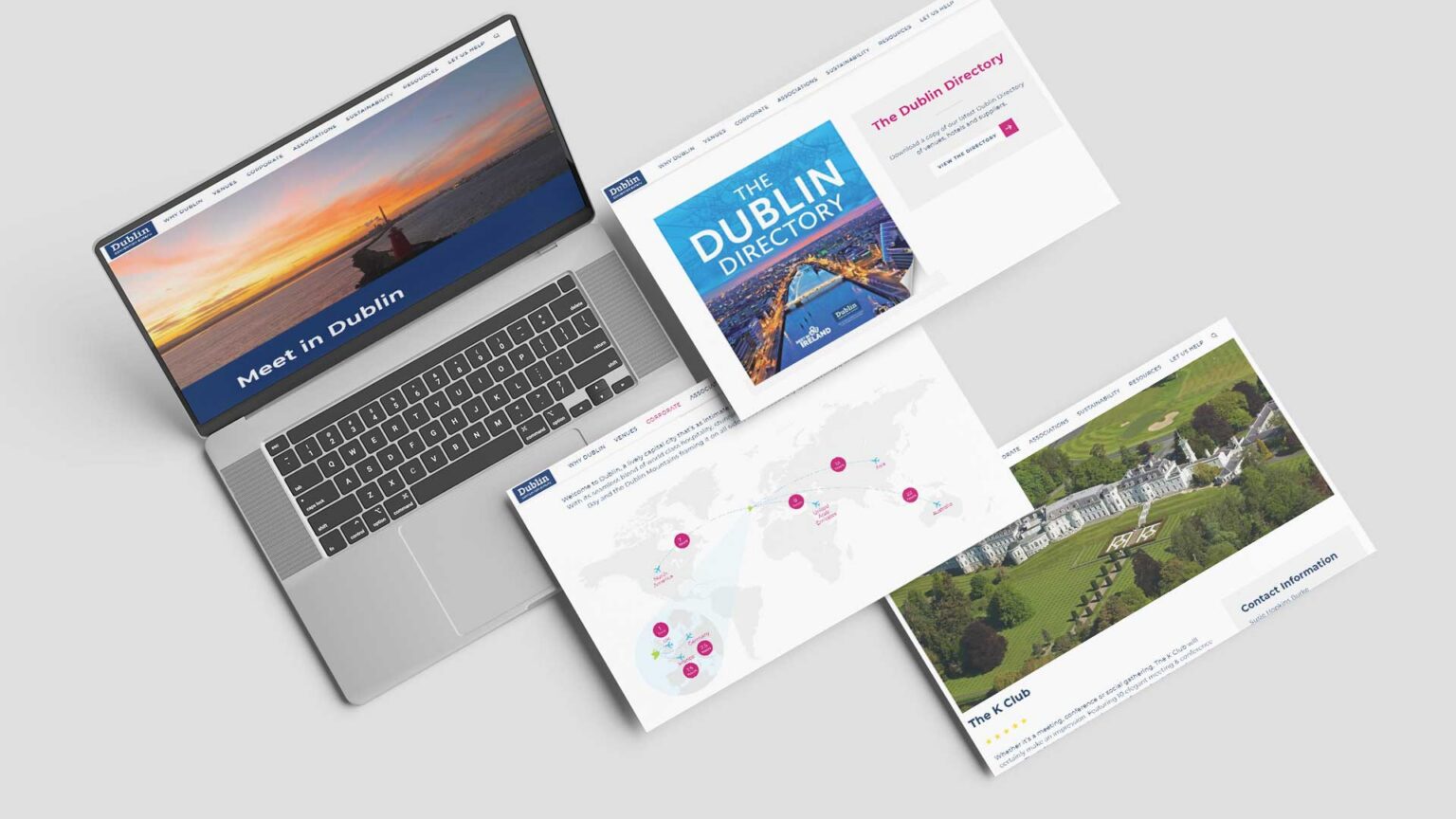
Dublin Convention Bureau promotes Dublin as a destination for international conferences and business events, and we have built and supported its website for years. In 2025 the bureau asked us to audit that site against WCAG 2.2 AA and put right everything we found.
The challenge
We built dublinconventionbureau.com and have looked after it under an ongoing support contract ever since. Websites that live that long keep growing. New pages, new content and new features arrive year after year, and accessibility can slip quietly while everyone is looking elsewhere.
Dublin Convention Bureau sits within Fáilte Ireland, so its website has to work for everyone who comes to it, including people using screen readers, keyboard-only navigation or screen magnification. Following a review with the client we agreed one clear and measurable target: WCAG 2.2 AA across the whole site. Then we agreed how to get there, and how to stay there.
How the work runs
The work runs in phases, so the bureau always knows what stage it is at and what comes next.
Automated tools only catch part of the picture. They are good at flagging missing labels and code-level faults, but they cannot tell you whether a person can actually complete a journey through the site using only a keyboard. That is why manual testing and user journey evaluation carry equal weight in our audit.
- Audit. Automated testing and technical analysis first, then manual testing and user journey evaluation, then report compilation and an internal quality review
- Report. One comprehensive document setting out every issue found, what it affects, and what it takes to fix
- Remediation, worked through in order of severity. Critical issues first, then high priority, then medium and low
Keeping it accessible
An audit is a snapshot. A site that changes every week will drift back out of compliance unless someone is watching it. So the fourth phase has no end date. Monitoring is part of the ongoing support arrangement rather than a separate piece of work, with reporting built into the service level agreement.
- Weekly meetings and reporting
- Monthly accessibility reports
- Quarterly reviews
- An annual comprehensive audit update
Why it is set up this way
The bureau gets a single documented view of where its website stands against WCAG 2.2 AA, in a form it can show to anyone who asks. Remediation runs to an agreed order of priority, so the issues that shut people out are dealt with first rather than whichever ones are quickest. And because monitoring sits inside the existing support contract, accessibility becomes something maintained rather than something achieved once and then forgotten.
It also means one team is accountable for both the site and the standard. There is no gap between the people who found the issues and the people who fix them, and no argument about whose job it is when something new goes live.